
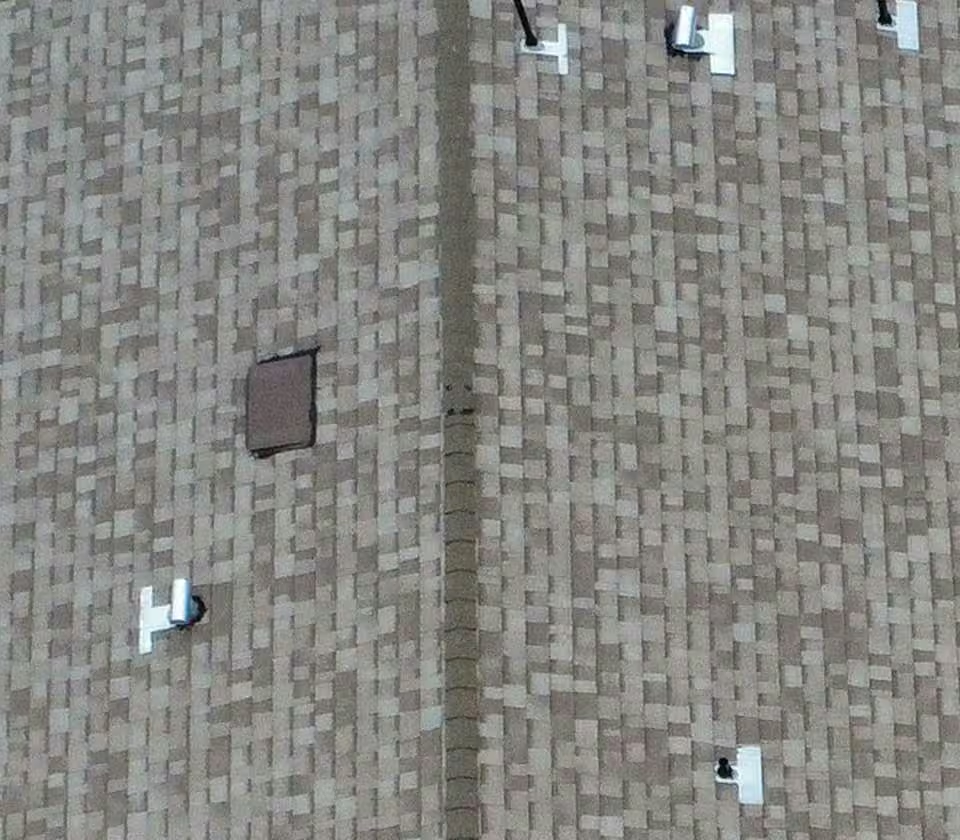
Most roof questions begin the same way: what condition is this roof in today? We examine the roof covering, the flashing details and the visible structure, then explain our findings. Those findings guide repair, replacement, maintenance and budget decisions for property owners across Los Angeles.
Our team inspects houses and commercial buildings, including properties with a suspected roof leak. Some owners schedule before a purchase, and others because an insurer requested a current inspection.
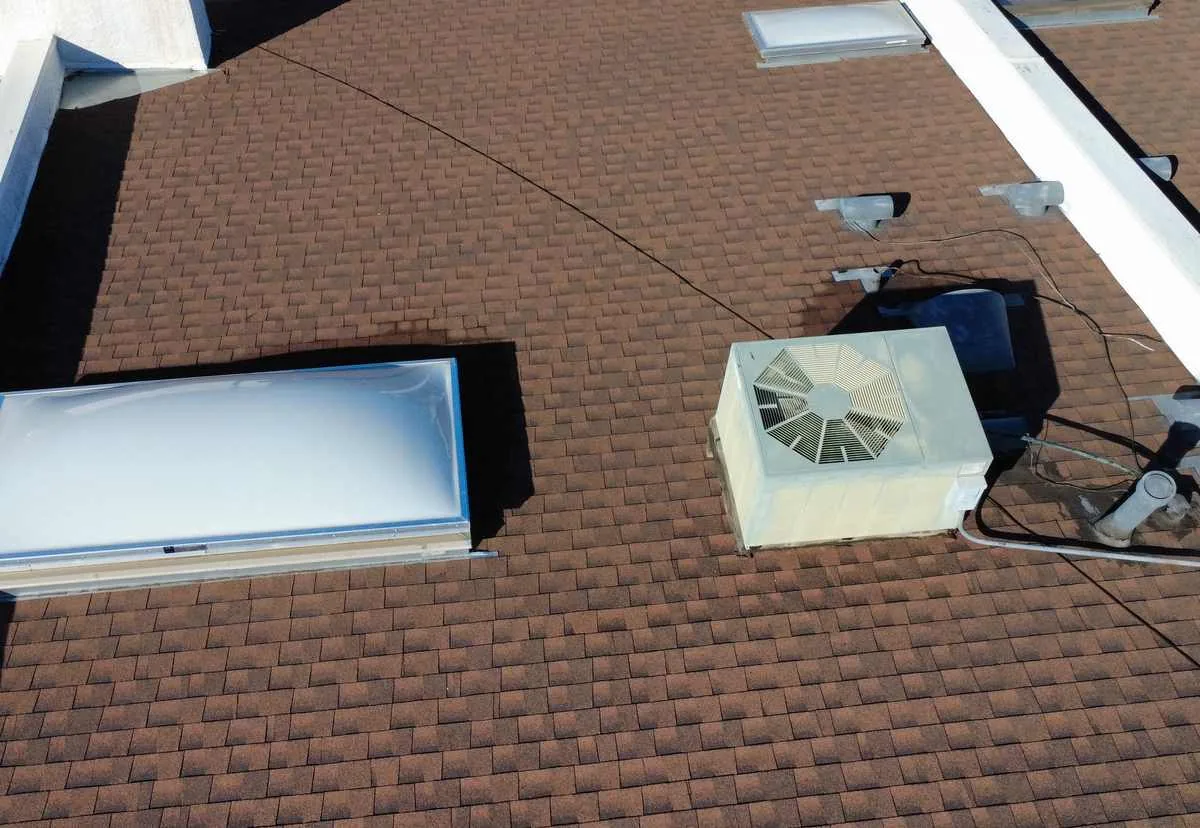
Inspection purpose
A roof inspection gives owners an accurate picture of current roof condition before they commit money to it.
An inspection answers a practical question about roof condition, not a sales question about materials. We review the roof surface and the joints where rainwater most often enters a building. That picture is what an owner needs before committing money to the roof.
Owners contact us for several different reasons, and an inspection booking usually begins with one of these situations.
Whatever the reason, every visit ends the same way: an accurate account of current roof condition. Owners decide what happens next once that assessment is in their hands.
- A property purchase, where the buyer or the seller wants the roof reviewed
- An insurer that has asked for a current roof inspection
- Maintenance planning for a commercial property
- A suspected leak, with stains or damp spots showing inside
- Questions about existing tile and the underlayment beneath it
Leak investigation and documentation
Leak visits focus on where water is entering the building, and on what we can document.
A suspected leak narrows the inspection to the roof above and around the damp area. We examine the covering and the flashing at those transitions first. What we can inspect depends on safe access to that section of the roof.
Owners who need the findings on paper can request a written report when they book the inspection. We limit the description to the conditions we actually observed.
What the assessment covers
The inspection covers what we can see and reach, from the roof covering down to any visible decking.
Every roof is different, so we describe actual conditions instead of promising a standard checklist. The review covers the roof covering, the flashing transitions around it and the visible structure.
Homeowners who want this described for a single-family property can read our residential roof inspection page.
Commercial and residential roofs need the same basic questions answered, even when the buildings differ in size and construction.
Roof surfaces and interfaces
Flashing, decking and underlayment each occupy a different layer of the roof system.
Joints at walls, chimneys and valley transitions are sealed by flashing. Those joints matter, because they connect the roof to surfaces the covering cannot reach.
Decking, sometimes called sheathing, sits directly underneath the roof covering. Underlayment lies below the tile or shingle, so it is rarely visible from the surface.
Observed conditions and access limits
Some roof areas cannot be reached safely, and we report that limit instead of guessing.
Rooftop equipment, finishes and unsafe footing can all block part of a roof surface from view. When that happens, we describe the limitation rather than filling the gap with assumptions.
Our findings cover the conditions we observed during that inspection, and nothing further.
Commercial property decisions
Commercial owners usually connect roof condition to a budget, a purchase or a maintenance plan.
Commercial owners and property managers often need roof condition before they approve annual spending. We examine the roof areas around equipment, drains and edges wherever access allows.
A maintenance inspection is also useful before a property changes hands or a lease is signed. Those findings give the owner something specific to plan around.
When water is already entering the building, a focused roof leak inspection is usually the better starting point.
Larger commercial properties and multiple buildings often need more detail than this page can hold.
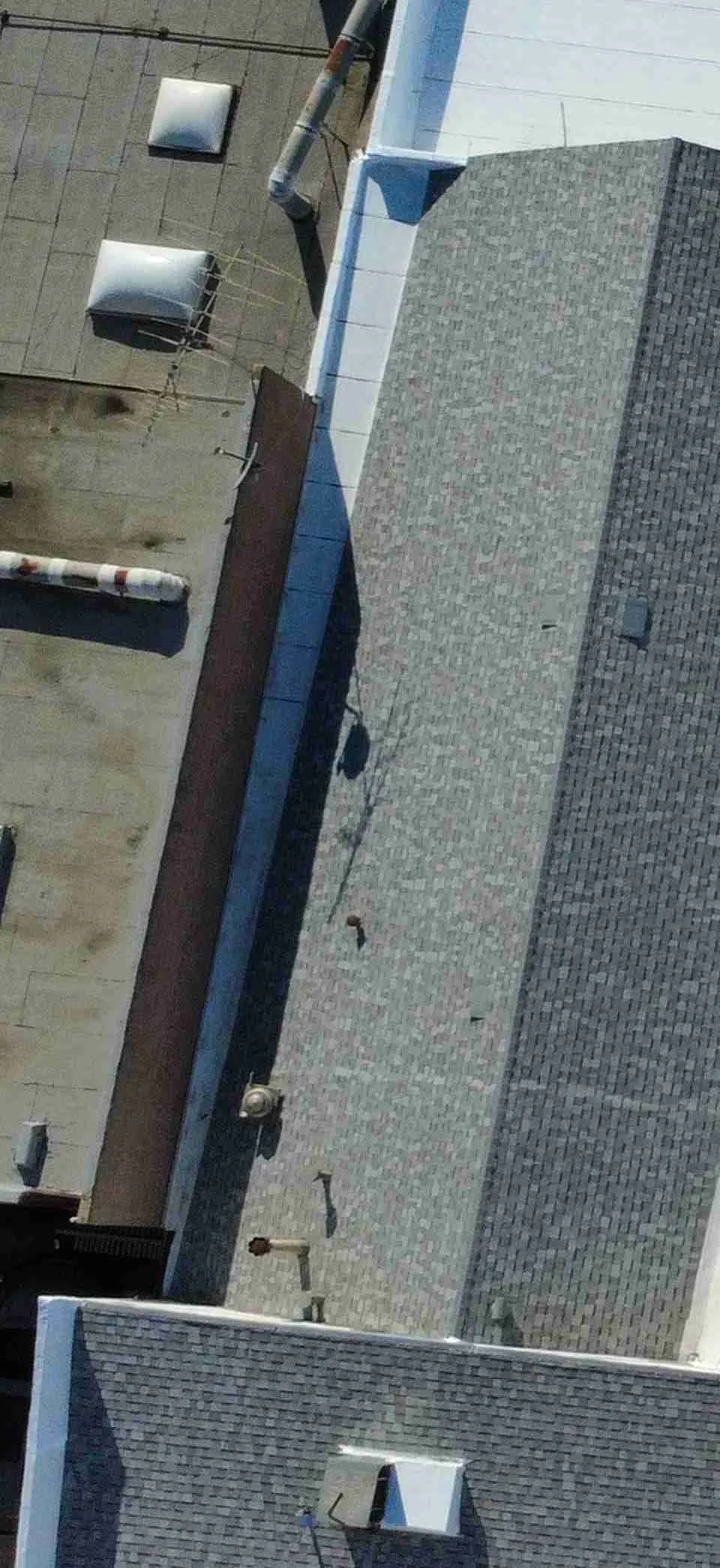
Residential and transaction needs
Buyers and sellers usually want the roof inspected while the property is still under discussion.
A buyer wants to understand what the roof will need after the sale closes. A seller often wants the same information before anyone else raises the question.
Either party can request the inspection, and the scope of the visit stays the same. We evaluate the roof itself, not the remainder of the transaction.
When the findings have to exist on paper, our roof inspection reports page explains what a written report covers.
Owners who are not selling request the same review, often before planning other roofing work.
Findings, reports and next steps
Findings come first, and a written report or follow-up work are separate decisions.
A free estimate is a quote for roofing work we propose to do. A detailed inspection and a written report are a separate service, and not the same offer as that quote.
Repair or replacement can follow an assessment when the roof condition requires it. That decision belongs to the owner, once the findings are clear.
Roofing work in the city may require a permit, and we help owners with that step. The Los Angeles Department of Building and Safety handles building permits and inspections for city properties. Requirements depend on the property, so we verify the current process before any work begins.
Owners with more than one property can review the areas we serve before scheduling each inspection.
Los Angeles coverage and booking
We schedule roof inspections across the City of Los Angeles, and booking begins with a phone call.
Call (323) 508-2486 to book a roof inspection in Los Angeles or to ask what a visit covers. You can also send the property address and your question through our online contact page.
Commercial owners can begin with our commercial roof inspection page, which explains that service in more detail. We carry out roofing work under CSLB #1112525.
The City of Los Angeles recognizes 99 certified Neighborhood Council areas across the city. Those council areas, and the ZIP codes that overlap them, describe where we schedule inspections.
Some ZIP codes below cross the city boundary, so only the portions inside Los Angeles are in scope.
Council areas and ZIP codes we cover
Each council area below appears with the ZIP codes it overlaps.
We cover Arleta NC, which takes in 91331, 91345, 91352 and 91402. Arroyo Seco NC work runs through 90031, 90032, 90042 and 90065. Hermon NC reaches 91030, while Lincoln Heights NC shares 90031 and 90033.
Arts District Little Tokyo NC spans 90012, 90013, 90021, 90023 and 90033. Historic Cultural North NC shares 90012, 90026 and 90031. Boyle Heights NC brings in 90023, 90033 and 90063.
Atwater Village NC covers 90027 and 90039, plus 91201, 91505, 91506 and 91521. Elysian Valley Riverside NC and Greater Cypress Park NC both take in 90039 and 90065. Glassell Park NC adds 90041, 90065 and 91204.
Bel Air-Beverly Crest NC includes 90049, 90069, 90077 and 90210. Sherman Oaks NC continues through 91401, 91403, 91411 and 91423. Studio City NC covers 91423, 91602, 91604 and 91607.
Canoga Park NC covers 91303, 91304, 91307 and 91311. Winnetka NC shares 91303, 91306 and 91324, and West Hills NC reaches 91307 and 91367. Woodland Hills-Warner Center NC extends to 90290, 91302, 91356 and 91364.
Central Alameda NC covers 90011 and 90058. South Central NC includes 90011, 90021 and 90037, while Zapata-King NC shares 90003. Community and Neighbors for Ninth District Unity (CANNDU) covers 90001, 90003 and 90011.
Central Hollywood NC covers 90028, 90038 and 90046. Hollywood Studio District NC shares 90027, 90029 and 90038. Hollywood United NC and Hollywood Hills West NC both take in 90068, and the latter reaches 91522.
Central San Pedro NC covers 90731 and 90744. Coastal San Pedro NC adds 90275 and 90732, and Northwest San Pedro NC shares 90710. Wilmington NC runs through 90744, 90745, 90802, 90810 and 90813.
Chatsworth NC covers 91311, 91324 and 91326. Northridge West NC shares 91311 and 91326, while Northridge East NC adds 91325 and 91330. Northridge South NC reaches 91306 and 91335.
Del Rey NC covers 90066, 90094, 90230 and 90292. Venice NC includes 90291 and 90405, and Mar Vista NC covers 90034, 90064 and 90066. Westchester/Playa NC extends to 90045, 90245, 90293 and 90304.
Downtown Los Angeles covers 90007, 90014, 90015, 90017, 90026 and 90071. Pico Union NC shares 90006, 90007 and 90015. Westlake North NC covers 90017, 90026 and 90057, and Westlake South NC adds 90006.
Eagle Rock NC covers 90041, 90042, 91105, 91205 and 91206. Historic Highland Park NC shares 90042, 90065 and 91030. LA-32 NC reaches 90063, 91801 and 91803.
East Hollywood NC covers 90004, 90027, 90029 and 90038. Los Feliz NC includes 90027, 90039 and 90068, and Silver Lake NC shares 90026. Echo Park NC covers 90012, 90026 and 90057.
Empowerment Congress Central Area NC covers 90008, 90037, 90043, 90044, 90047 and 90062. Empowerment Congress North Area NC includes 90015, 90018 and 90089. Empowerment Congress Southeast Area NDC reaches 90002, 90059 and 90061.
Empowerment Congress Southwest Area NDC covers 90044, 90047, 90303 and 90305. Empowerment Congress West Area NDC includes 90016, 90018 and 90232. Park Mesa Heights NC covers 90056, 90301, 90302 and 90305.
Encino NC covers 90272, 91316, 91356, 91403, 91406, 91411 and 91436. Tarzana NC shares 91335, 91356 and 91364, while Lake Balboa NC adds 91325 and 91343. Reseda NC reaches 91306, 91324 and 91367.
Foothill Trails District NC covers 91040, 91042, 91342 and 91504. Sunland-Tujunga NC shares 91042, 91214 and 91352. Sun Valley Area NC covers 91331, 91352 and 91605.
Granada Hills North NC covers 91321, 91326, 91342 and 91344. Granada Hills South NC includes 91325, 91343 and 91344. Porter Ranch NC reaches 91311, 91326 and 91344.
Greater Toluca Lake NC covers 91601, 91602, 91604 and 91608. NC Valley Village shares 91601, 91602 and 91607, and NoHo NC adds 91606. NoHo West NC covers 91352, 91405, 91605 and 91606.
Greater Valley Glen covers 91401, 91405, 91605, 91606 and 91607. North Hollywood North East NC shares 91352, 91505 and 91605. Van Nuys NC runs through 91402, 91406, 91411 and 91423.
Greater Wilshire NC covers 90004, 90005, 90010, 90019, 90020 and 90036. Wilshire Center - Koreatown NC shares 90006, 90020 and 90057. Rampart Village NC includes 90004, 90010 and 90026.
Harbor City NC covers 90501, 90710, 90717 and 90745. Harbor Gateway North NC adds 90247 and 90248, while Harbor Gateway South NC reaches 90502 and 90504. Watts NC covers 90002, 90059 and 90262.
MacArthur Park NC covers 90005, 90006, 90010 and 90057, and Olympic Park NC shares 90019 and 90036. P.I.C.O. NC adds 90035 and 90048, while Mid City West CC covers 90046, 90069, 90210 and 90211.
Mid City NC covers 90016, 90019, 90034 and 90232. West Adams NC shares 90016, while United Neighborhoods NC reaches 90007 and 90018. South Robertson NC covers 90067, 90212 and 90232.
Mission Hills NC covers 91340, 91343, 91344 and 91345. Sylmar NC shares 91331, 91340 and 91342, and Pacoima NC adds 91040 and 91352. Panorama City NC covers 91343, 91345, 91402 and 91605.
North Hills East NC covers 91345, 91402 and 91406. North Hills West NC shares 91343 and 91406.
North Westwood NC covers 90024, 90025, 90073 and 90095. Westwood NC shares 90049, 90067 and 90210, and Westside NC adds 90035 and 90212. West Los Angeles Sawtelle NC reaches 90403, 90404 and 90405.
Palms NC covers 90034, 90064, 90066 and 90232. Voices NC includes 90003, 90037, 90044 and 90047.
Common questions about roof inspections in Los Angeles
Does an insurer-required roof inspection mean you handle the insurance claim?
No, those are two different things. We inspect the roof and describe its condition, which is what the insurer asked for. Claim handling stays between the insurer and the policyholder.
Can existing tiles be reused when the underlayment is replaced?
Tiles can often be reused. We lift existing tiles so the underlayment beneath them can be replaced, then reuse the ones that remain suitable. We look at both layers during the inspection.
Is an inspection worth booking when nothing looks wrong?
Many owners book a maintenance check with no known problem. The visit gives them a current picture of the roof to plan repairs and budgets around. Commercial maintenance planning is one of the common reasons for that request.