
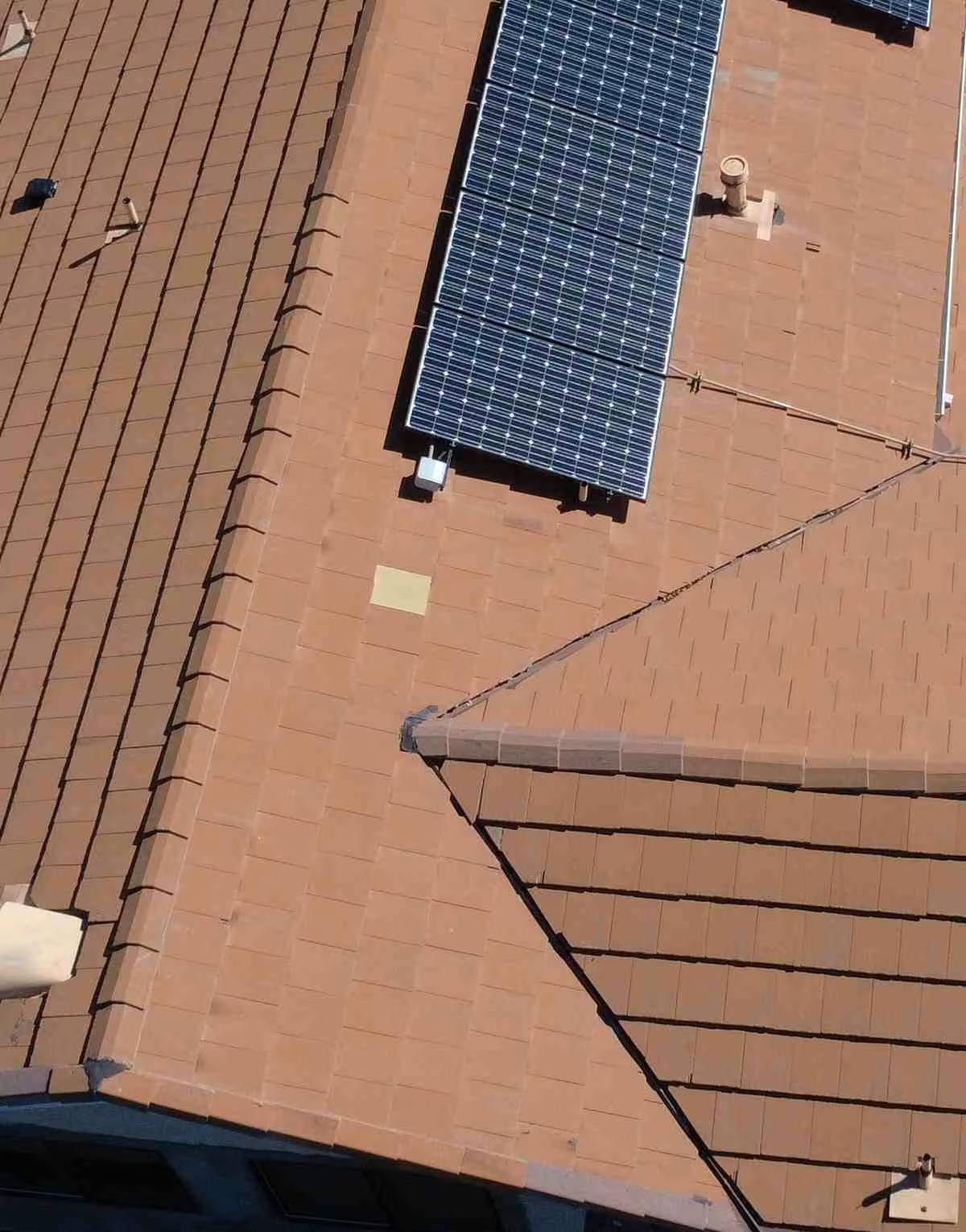
Roof questions in Bell often start with a ceiling stain, a pending sale, or a letter from an insurer. Our team inspects the whole roof, then writes down the findings so you have a record. That written record is often what a buyer or a seller asks us to provide.
A quick look from the sidewalk rarely answers the real question about a roof's condition. We walk the roof where it is safe, photograph each slope, and note any damage we discover. You get a clear picture of the covering, the flashing and the drainage, instead of a guess.

Why Bell owners book a roof inspection
Most calls come from owners who need the roof looked at closely and the results written down.
Most calls we take begin with one request: inspect the roof and write down the results. A spoken summary does not help much when other people have to read and rely on it.
The reasons vary more than owners expect, and some are simply buying or selling a home. Others need to meet an insurer's request, and commercial owners plan upkeep one building at a time.
Leaks bring in another set of calls, and those owners often want answers as quickly as possible. Water can appear in a hallway ceiling, far from the opening on the roof that let it in.
Buyers have a short window to learn about the roof, and sellers want to know what inspectors find. Older tile roofs raise a new question about the underlayment that sits under the tile.
What the written report is for
We ask what the document has to do, because that answer shapes the whole visit.
Before we book a visit, we ask what the finished document needs to do for you. A sale, an insurer request and a yearly upkeep check each call for a different level of detail.
Those answers change the shape of the visit in small but practical ways once we arrive. A sale may require photos of every slope, while a leak call needs a focused search instead.
A few questions at the beginning save time for you and for us on inspection day.
Houses and small buildings follow a well-known path from the first phone call to the report. You can read how a residential roof inspection works before you pick up the phone. The visit covers the roof surface, the flashing, and the roof edges we can reach safely.
- What made you call about the roof today, and how long has the problem continued?
- Is the roof on a house, an apartment building, a rental, or a commercial property?
- Where have you seen water, staining, or loose roofing material on the ceiling or walls?
- Is there a deadline by which you need the written findings delivered to you?
- Has anyone worked on this roof during the past few years, including any repairs?
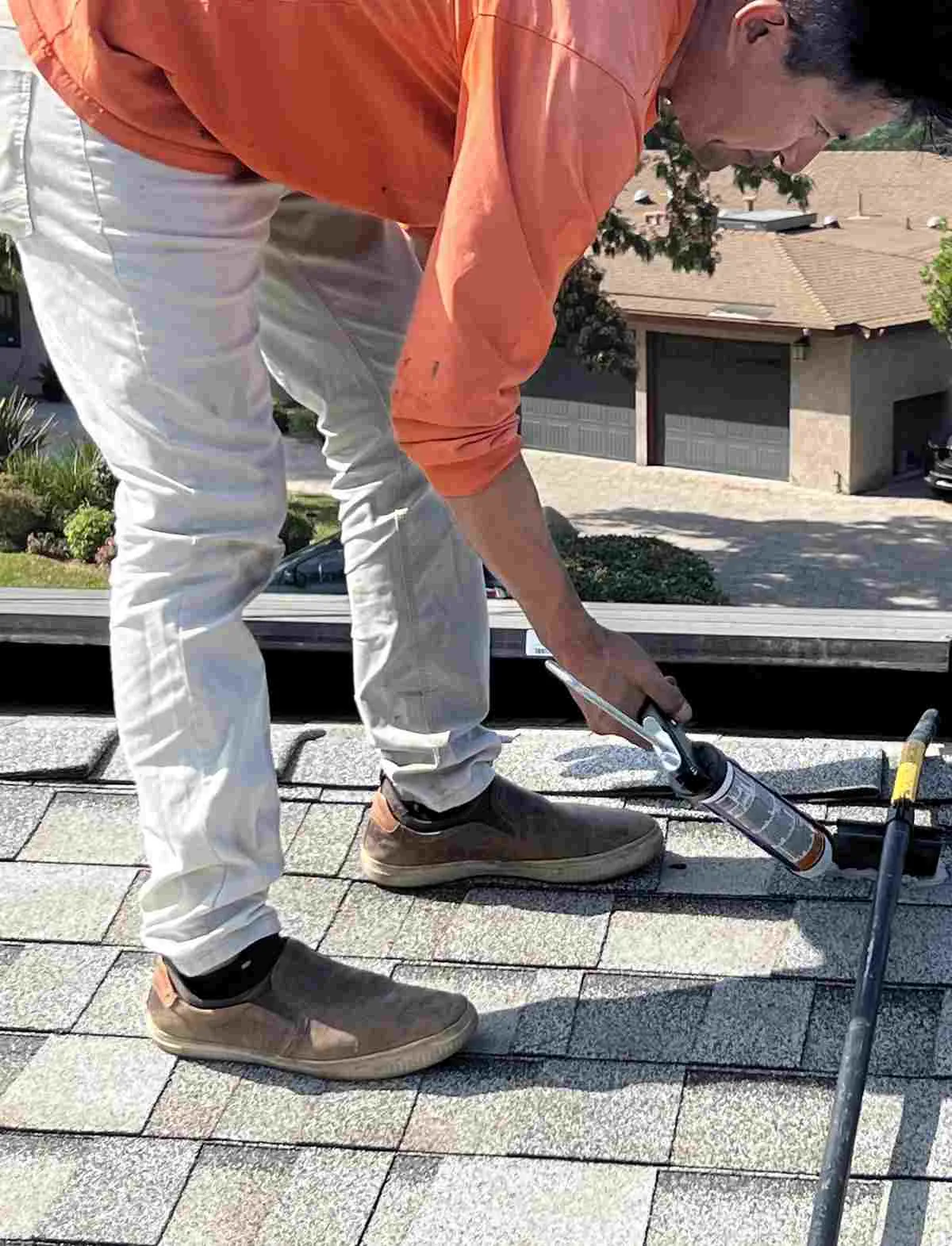
Inspection options for homes and buildings
We inspect homes, apartment buildings and commercial roofs, and the visit follows the building itself.
Roofs can differ from one street to the next, even inside a small city such as Bell. We shape the visit around your building instead of running through a standard package. That keeps the findings useful to you once the written report is finally in your hands.
We also ask about roof access and safety well before the day of the visit. Some roofs are steep or slick, and others are crowded with equipment, pipework and solar panels. Where a rooftop walk is not safe, we inspect carefully from the ladder and the roof edge.
Houses and apartment buildings
Home visits cover the roof surface, the flashing, the drainage path and the roof edges.
On houses, the tile, shingle and flat sections each age in their own way over time. We note which problems need attention right away, and which ones can safely wait another season.
Older homes often carry roof work that was added in layers over many years. Lifting a few tiles can show whether the underlayment beneath them still does its job. Tiles still in sound condition can go back down after the new underlayment is in place.
Commercial and mixed-use roofs
Shops, offices and light industrial roofs need a different walk and a different set of notes.
Flat roofs bring drains, seams and rooftop units into the picture, and each one matters. Any of those spots can trap standing water or open up slowly as the membrane ages. We inspect the drains, the seams and the flashing around rooftop equipment during the same visit.
Owners who plan ahead often start with a commercial roof inspection and repeat the visit each year. Written notes make it easier to plan roof work across buildings and to compare one year with the next.
Leaks and water stains
A leak search follows the water back from the ceiling stain toward a likely entry point.
A leak rarely starts at the spot where the ceiling stain finally appears inside the house. We trace the water back toward the likely entry point, then write down exactly what we find. Flashing, valleys and old patch work are common places for water to slip past the roof.
If water is your main worry, a roof leak inspection is the right place to start. We would rather locate the actual source than paint over the stain it leaves behind.
Roof rules and local detail in Bell
Bell is its own city, so roofing permit questions belong to the Bell city offices.
Bell is an incorporated city inside Los Angeles County, and it runs a city hall of its own. Roof permit questions go to Bell, and not to a City of Los Angeles office. We check the current city process for each roof before any work starts on the building.
The city's building and safety office is the place to learn what a roofing permit involves. Rules can change, so we confirm the steps that apply to your address before we begin. We can help with the permit paperwork, though the city alone decides the final outcome.
Written findings matter even more once a permit or a property sale is in play. Our roof inspection reports gather the condition notes and the photos in a single file. You can hand that file to the buyer, the insurer or the office that asked for it.
ZIP codes and city limits in Bell
Both ZIP 90201 and ZIP 90040 reach into Bell, and each also covers land outside the city.
Bell addresses often fall inside ZIP 90201, and ZIP 90040 also reaches part of the city. Each of those postal areas extends well past the city line, so the mailing name can mislead. An address with a 90201 postal name is not always inside the Bell city limits.
We match the address to the city boundary before we talk about which rules apply. That step matters, because the wrong city means the wrong permit desk and the wrong rules. It also keeps the written findings correct for the buyer, insurer or agent who reads them.
Findings, documents and booking a visit
A written inspection report is a service of its own, and a free estimate is separate.
Two very different things often get mixed up during that first phone call about a roof. A free estimate gives you a price for work that we can already see and measure. We schedule a detailed inspection, and the written findings it produces, as its own booking.
We agree on the scope before the visit, so nothing about the service comes as a surprise. If the roof needs repair or replacement, that work can follow once you decide. The findings come first, and every decision about the work itself stays with you.
We cover much of the county, and you can check our service areas before you call us. Our license number is CSLB #1112525, and you can look it up online at any time.
To set a date, call (323) 508-2486 and tell us what the roof is doing. If writing is easier, describe the roof on our contact page instead. We will confirm exactly what the visit covers before we put it on the schedule.
Common questions about roof inspections in Bell
Does an insurer-required roof inspection mean you handle my claim?
No, an insurer's inspection request and an insurance claim are two separate matters. We inspect the roof and write down what we find, and then we hand you the report. Anything to do with filing or settling a claim stays between you and your insurer.
What parts of the roof do you look at?
We look at the covering, the flashing at walls, chimneys and valleys, and the drainage path. Where the decking under the covering is visible, we note what we can see of it. On tile roofs, the underlayment beneath the tile often drives most of the owner's questions.
Can you inspect a roof before I list a home for sale?
Yes, and many owners prefer to book the inspection well before the listing goes live. A visit before listing puts the roof condition in writing before any offers come in. You then decide what to repair and what to share with buyers during the sale.