
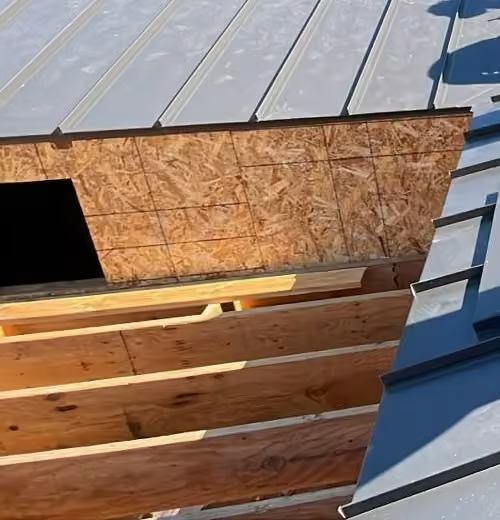
A roof inspection answers one plain question: what condition is this roof actually in right now? Owners book a roof inspection before a sale, after a leak, or as part of regular upkeep. What you want at the end of the visit shapes how the whole inspection runs.
We inspect roofs on houses, apartment buildings and commercial property across the Los Angeles market. Some calls need a close look at one problem area, while others need a full roof review. Owners who want a record they can keep on file can also ask for written documentation.
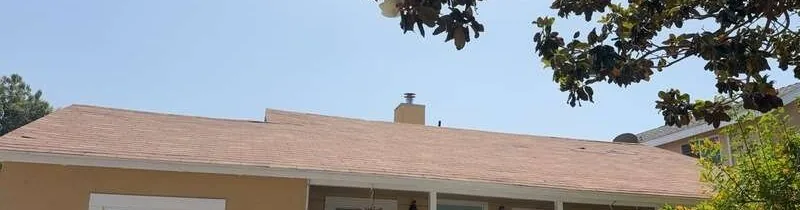
Why owners in Compton book a roof inspection
Most calls start with a sale, an insurer request, planned upkeep, a leak, or a tile question.
People rarely book a roof inspection out of simple curiosity, since something specific usually sets it off. That reason shapes the visit, so we ask about it before we talk about scope.
A property purchase is one of the most common reasons we hear on the phone. A buyer wants a clear picture of the roof before closing, and a seller often wants the same.
Some owners call because an insurer has asked them for a roof inspection on the property. That request is about the condition of the roof itself, so we look and report what we see.
Commercial owners often plan upkeep instead of waiting for a problem to appear on the roof. A maintenance check gives you a current read on the roof and what needs attention first.
A suspected leak leads to a different kind of visit, because the goal is finding where water gets in. Water travels, so the stain inside the building may sit far from the actual source.
Tile roofs bring their own set of questions, usually about the layer that sits beneath the tile. You cannot judge that layer from the ground, which is why an inspection settles it.
Other calls are simply about time, because a roof has stood for years without a close look. That is a fair reason to book a visit, even when nothing obvious looks wrong.
Sometimes the request comes from someone else, such as an agent, a manager or an insurer. We still ask what you need out of the inspection before we set the scope.
None of these reasons is better than another, and each one points the visit in a different direction. Telling us early keeps the inspection focused on the part that actually matters to you.
Whatever the reason, we keep your purpose in front of us throughout the whole visit. It decides where we spend time on the roof and what you walk away with at the end.
- A home purchase or sale where roof condition is part of the decision
- An insurer that has asked for a roof inspection
- Planned maintenance on a commercial building
- A leak, a stain or a drip with no clear source
- Questions about tile, underlayment or work done in the past
Purpose, scope and what you get at the end
We set the scope from your purpose, then agree on what you receive when the visit is done.
Two visits to the same roof can look very different, because the purpose sets the scope. The scope then sets how the day runs, so we start with a few plain questions.
We ask what prompted the call, what kind of building it is, and how the roof can be reached. If you happen to know the roof covering, that detail helps us plan the visit.
Access matters more than most people expect, and it often decides how the inspection is carried out. A steep slope, a blocked side yard or a locked roof hatch changes the plan. Sorting that out before we arrive saves everyone time on the day of the visit.
Roof coverings differ, and that changes what we look for once we are up there. Tile, shingle and flat commercial roofs each have their own weak points and trouble spots. We adjust the visit to the roof in front of us rather than to a label.
Then comes the question that matters most at the end, and it is a simple one. Do you want the findings explained out loud, or do you need them set down in writing? Those are two different requests, and the answer changes how we plan the visit.
A free estimate and a detailed inspection are not the same offer, so we separate them early. An estimate covers proposed work, while a detailed inspection is paid work, and so is a written report.
We say this early so that nothing catches you off guard once the visit is booked. If you only want a quote on work you already know about, tell us when you call. If you need a documented review instead, we plan the visit around that request.
Most single-family calls follow the same path from the first question through to the findings. You can read how we run a home roof inspection before you decide to book one.
None of this has to be settled perfectly on the phone before we come out. Tell us what you know and we will fill in the rest, so the visit matches your purpose.
- What prompted the call: a sale, a leak, upkeep or someone else's request
- The type of building, and the roof covering if you know it
- How the roof can be reached and whether access is limited
- Whether you want findings explained on site, in writing, or both
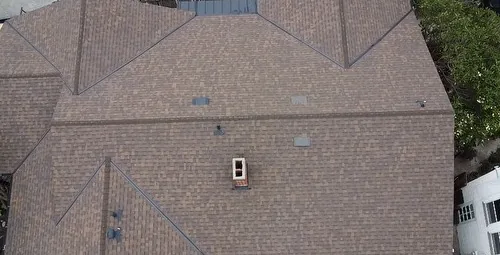
Inspection options for homes and commercial buildings
We inspect homes and commercial buildings, trace leaks, run maintenance checks, and write up findings when you ask.
The same set of options is open to every owner in the city, whatever the building. The right choice depends on the roof itself and on the purpose behind your call.
These options overlap more than the labels suggest, which is normal on a working roof. A maintenance check can turn up a leak path, and a buyer's visit can raise a tile question.
You do not have to pick the right label when you call us about the roof. Describe what is going on and we will sort it out, since one visit can cover several concerns.
We follow what the roof shows us, and we look closer when something appears out of place. You hear about what we find either way, whether it changes your plans or not.
Residential roof inspections
A home visit reviews the covering, the flashing details, and the layers below them where they can be seen.
A house roof holds a lot of small details that matter to its overall condition. Valleys, chimneys and walls all meet the roof somewhere, and those meeting points get a close look.
We check the covering for wear and damage, then look at the flashing around every transition. Flashing seals roof-to-wall, chimney and valley transitions, and we note what we see of the decking and underlayment.
Gutters, vents and skylights sit in the same conversation, because anything that breaks the roof surface needs checking. We look at how each of those details is sealed where it meets the roof.
Buyers and sellers ask for this visit often, and so do owners who have never had the roof reviewed. If part of the roof cannot be reached safely, we tell you rather than guess at it.
Commercial roof inspections
Commercial visits usually support maintenance planning and records for a building you own or manage.
Commercial roofs tend to carry more equipment: drains, vents, rooftop units and long runs of flashing. Each of those is a place where water can find a way in, so detail work takes time.
A maintenance check looks at the roof surface and everything that sits on top of it. We note what we find and walk you through all of it before we leave.
Roof access on a commercial building is its own topic, since ladders, hatches and locked doors affect the visit. Sorting the access out beforehand keeps the day simple for you and for us.
Managers often want something they can file and share, while owners often want work planned in a sensible order. Tell us which one you need before the visit, and you can read how a commercial roof inspection works.
Leak investigation
A leak visit focuses on finding where water enters, instead of reviewing every part of the roof equally.
A leak call has one clear goal, which is finding the way water gets in. That means working above and around the place where the water shows up inside.
Flashing joints, valleys and roof openings are common places to start looking for the entry point. Fasteners and worn spots in the covering also get attention during the same visit.
Not every leak shows itself on the day we visit, because dry weather can hide the path water takes. We tell you what we can confirm on the day and what remains uncertain.
If water has reached the decking or the underlayment, that matters for whatever work comes next. You can see how we handle a roof leak inspection and what the visit involves. Leaks are worth acting on early, before the water reaches more of the roof.
Tile and underlayment questions
Owners with tile roofs often ask about the underlayment, the layer that sits out of sight beneath the tile.
Underlayment lies beneath tile or shingle, so you cannot see it from the ground below. That is a common reason why owners book an inspection on a tile roof.
Tile can look perfectly fine while the real question sits underneath it, out of sight. An inspection is how you get an answer about that layer instead of a guess.
Tell us about any tile work you have had done before, since past repairs often explain what you are seeing. We keep this part factual, reporting what we saw and what stayed hidden.
Roof layers we check
The covering, the flashing, the underlayment and the decking each do a different job on a roof.
A roof is a set of layers rather than one solid sheet of material. The covering is the part you see from the street, and the underlayment and decking sit below it.
Decking, also called sheathing, sits beneath the roof covering and supports the layers above it. Underlayment lies between that decking and the tile or shingle you see on the outside. Where the roof meets a wall, a chimney or a valley, metal flashing keeps that seam watertight.
These layers work together, which is why one problem can reach the rest of the roof. Water past the covering meets the underlayment next, and the decking is what it reaches after that.
Not every layer can be seen on every visit, and that limit is worth stating plainly. Where a layer stays hidden from view, we say so rather than assume its condition.
Compton city limits, ZIP areas and permits
Compton is an incorporated city in Los Angeles County, with its own building and planning departments.
Compton is an incorporated city inside Los Angeles County, which matters for roof work. The city handles building permits within its own limits, so a roof project must be checked against the current process.
People sometimes mix up the city with the wider county area that surrounds it. Compton is its own city with its own departments, and that is the practical point for permits.
The property itself matters just as much as the city process behind the permit. What the roof is made of and what work is planned both come into it, so we look at both.
Before you plan any work, check the current requirements with the city itself. The Compton Building and Safety department sets out the permit and inspection process, and requirements can change.
Land use and development questions sit with a different office inside the same city government. The Community Development department is the place to begin when your question goes beyond the roof.
Approval and timing rest with the city rather than with us, and we do not speak for it. We can tell you what the roof needs, while the city decides what it will allow. We point you to the official city pages and stay on the roof side of things.
Written documentation is a separate request from the visit itself, and not every owner needs it. If you want it, our roof inspection reports page covers that option in more detail. Ask for it when you book, so we can plan the visit around that request.
ZIP areas that meet the city boundary
Several postal ZIP areas cross the Compton city line, and only the part inside the city is in scope.
A ZIP area and a city boundary are drawn for different reasons, so they rarely share a shape. A ZIP can therefore sit partly inside Compton and partly outside the city line.
We cover addresses inside the city limits in 90220, 90221 and 90222, which cross the boundary. The same holds in 90059, where only the Compton portion belongs on this page.
Parts of 90262, 90723, 90746 and 90805 also touch the city boundary in the same way. Only the piece inside Compton falls under this page, since addresses past the line sit under another jurisdiction.
Nearby cities and county areas begin where Compton ends, so a short distance can change the rules. That is why the city boundary matters here, rather than the ZIP code on its own.
This matters more than it first sounds when a roofing permit comes into the picture. Your mailing ZIP does not decide who handles that permit, because the property's location inside the city line does.
The difference shows up in the permit paperwork rather than in the roof covering itself. A shingle behaves the same way on both sides of a city line, but the process around it changes.
If you are unsure which side of the line your property sits on, give us the address. We can go over it with you when you call to book the visit.
Findings, documentation and booking your visit
You get findings you can act on, a written report if you asked for one, and a clear next step.
At the end of the visit we go over everything we found on the roof. We explain it in plain words without trade jargon, and you can ask questions while we are still there.
A written report is separate work from the visit, and a detailed inspection is paid work too. A free estimate is a different offer that covers proposed work, so ask for the one that fits.
If the roof needs nothing done to it, we will tell you that just as plainly. An inspection that finds little is still a useful answer, because you then know where you stand.
Some roofs need repair or replacement once the review is finished and the findings are clear. That work can follow the assessment where it is needed, but the inspection still comes first.
We work under CSLB #1112525, and the state board keeps a public license lookup where anyone can check that number.
Compton sits inside the area we cover across the Los Angeles market for inspections. Our service areas page lists the rest of the places where we take inspection calls.
You can book a visit by calling (323) 508-2486 and telling us what prompted it. You can also reach us through our contact page, and either way the first questions are the same.
Come with your address, the type of building, and what you need at the end. That is enough to get a visit set up, and we can fill in the details from there.
If you are still deciding between a quote and a full review, say so when you call. We will lay out the difference clearly, and the choice stays yours either way.
Keep whatever you receive with your property records, ready for the next time something changes. It gives you a starting point later, and roofs are easier to track when things are written down.
- Call (323) 508-2486 or send us your details online.
- Tell us what prompted the visit and where the property sits in Compton.
- Say whether you want findings explained on site, a written report, or both.
- We set a visit that suits the roof, the access and your purpose.
- After the visit, we go over the findings and any work that may follow.
Common questions about roof inspections in Compton
What will fail a roof inspection?
We do not hand out a pass or fail grade, since a roof is not a test. We describe the condition we find, and worn flashing, damp decking and aged underlayment carry the most weight.
If my insurer asked for a roof inspection, are you handling my claim?
An insurer-required inspection is not claim handling, so your claim stays between you and your insurer. We look at the condition of the roof and report what we find to you.
Do the tiles have to be replaced if the underlayment is replaced?
Existing tiles can be lifted so that the underlayment beneath them can be replaced. Tiles that remain suitable can then be set back in place once that work is done. What actually fits your roof depends on what the inspection finds underneath the tile.
Does a roof inspection tell me whether I need a permit?
The inspection tells you the roof's condition and what work may be needed on it. Whether a permit is required is set by the city rather than by our findings. We do help owners with the roofing permits that a project requires.