
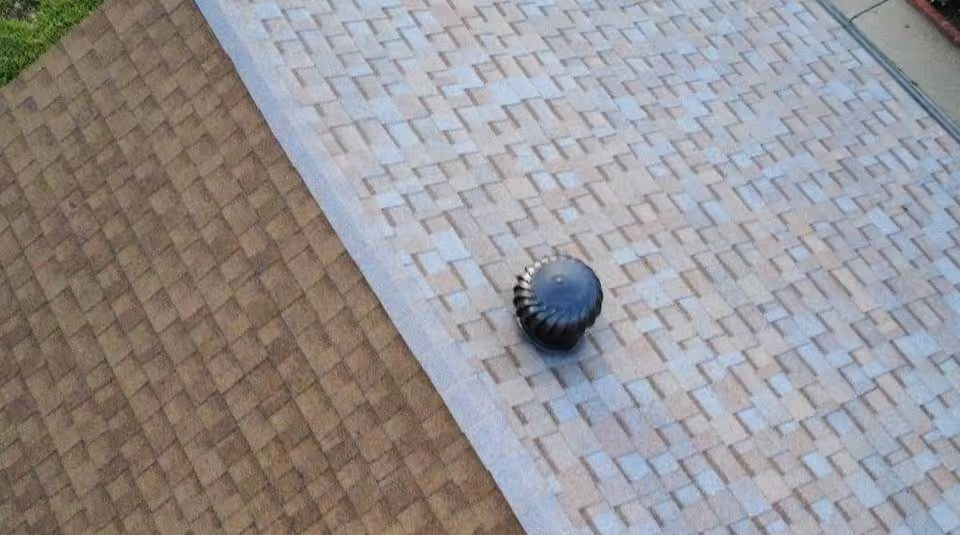
The City of Los Angeles keeps a public record of the building permits it issues. We searched those records for reroof work and counted the permits for six full years. This page reports what we found, explains our method, and lists the limits of the data.
Permit counts are useful background, but they never describe the condition of a single roof. They also cannot tell you whether the permitted work was finished or ever started. We publish the filters we used, so you can repeat the same query yourself.
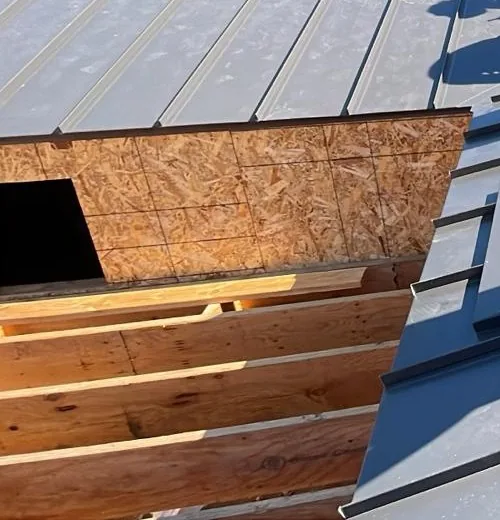
Permit totals and key observations
Reroof permits in Los Angeles climbed through 2023, then eased across 2024 and 2025.
Reroof permit totals rose from 8890 in 2020 to 14511 in 2023, the highest year measured. The total then eased slightly to 14274 in 2024 before dropping to 11954 in 2025. Even after that decline, the 2025 total stayed above the totals for 2020, 2021 and 2022.
One and two family dwellings account for the largest share in every year of the table. Apartment and commercial permits follow a broadly similar path at much smaller counts. Apartment permits reached their own high in 2024, while the other two groups declined.
These notes describe the permit records, not the reasons behind the changes. We do not assign a cause to the rise, the peak or the later decline.
| Year | 1 or 2 Family Dwelling | Apartment | Commercial | Total |
|---|---|---|---|---|
| 2020 | 7323 | 1100 | 467 | 8890 |
| 2021 | 7502 | 1062 | 460 | 9024 |
| 2022 | 8617 | 1218 | 548 | 10383 |
| 2023 | 11877 | 1821 | 813 | 14511 |
| 2024 | 11661 | 1874 | 739 | 14274 |
| 2025 | 9685 | 1632 | 637 | 11954 |
Dataset and selection method
We counted distinct issued permits whose work description mentions a reroof between 2020 and 2025.
The counts come from the City of Los Angeles building permit data on its open data portal. We read our copy on September 15, 2026, and the totals reflect the records on that date. Later edits at the source could shift these numbers a little.
Permit records describe planned work rather than the present state of any roof. Owners who want current condition details need a close look at a single home roof.
Date range and description filters
Permits issued from January 2020 through December 2025 with reroof wording in the description.
Our window opens on January 1, 2020 and closes before January 1, 2026. That keeps every year complete and leaves out partial records from the current year. The text filter is broad, because permit writers spell the word in several ways.
- Issue date from 2020-01-01 through the end of 2025; 2026 records left out.
- Work description contains REROOF, RE-ROOF or RE ROOF.
- City of Los Angeles permit records only.
- Date filter: issue_date >= '2020-01-01T00:00:00' AND issue_date < '2026-01-01T00:00:00'.
- Text filter: upper(work_desc) like '%REROOF%', '%RE-ROOF%' or '%RE ROOF%'.
Counting unit and duplicate checks
Each figure counts distinct permit numbers, grouped by issue year and recorded permit subtype.
We counted distinct permit numbers, so a repeated record cannot inflate a yearly total. The city gives each permit a subtype, and we kept those labels as recorded. A single building may still appear twice when it receives two separate permits.
- Unit: distinct issued permit numbers.
- Grouping: issue year and recorded permit subtype.
- Source categories: 1 or 2 Family Dwelling, Apartment, Commercial.
Annual trends
Growth through 2023 was broad, and the later drops were uneven across the three groups.
Dwelling permits rose from 7323 in 2020 to 8617 in 2022, a gradual climb. The 2023 figure of 11877 stood 3260 permits above the 2022 count, a sharp jump. Dwelling permits then eased to 11661 in 2024 and 9685 in 2025.
Apartment permits dipped to 1062 in 2021 and then rose for three straight years. Their high of 1874 arrived in 2024, one year after the citywide total peaked. Commercial permits stayed the smallest group, moving between 460 and 813 each year.
Business properties sit in their own column, and a commercial roof review answers questions the table cannot. Each number marks a permit that was issued, not roof work that crews completed.
What the data cannot show
The table tracks permit filings, not roof condition, finished work or single buildings.
Our filter reads the words in a permit description, so some roof work never appears. One description may cover several tasks, so a match tells us little about scope.
These records stop at the city boundary and do not include the surrounding cities. The data says nothing about the covering, underlayment, decking or flashing on a roof. For those details an owner needs a roof inspection at the home itself.
- This is a word-match subset, not a full count of roof work.
- A description may hold stock wording or several work types, so one match proves little.
- A count shows permits issued, not roof work that crews finished.
- The counts do not track single buildings, roofs checked, roof damage, contractor work or future demand.
- Apartment and Commercial are separate source labels; we do not merge them.
- We left 2026 records out, so every year here is complete.
- We publish no owner names, addresses, parcel numbers or contractor details.
Property-manager application
Treat the trend as background, then judge each property on its own roof condition.
Managers often ask whether roof work across the city is speeding up or slowing down. This table answers that at the permit level, and only inside Los Angeles. It cannot rank buildings, set priorities or point to the roofs that need attention.
A decision today rests on the roof itself, its slope, its assembly and its condition. For larger properties, that work belongs to an on site commercial roof assessment. Local approvals for the planned project also shape what an owner can do next.
Download and update notes
The CSV file repeats the six rows above and holds no personal permit details.
You can download the aggregate CSV file and check every figure against the public source. It has one row for each year, with the three categories and a total. The file shows no owner names, addresses, parcel numbers or contractor details.
The check date of September 15, 2026 shows how current these numbers are. Anyone can run the same filter on the portal and compare the results directly. If we publish a refresh, it will carry its own check date and method notes.
This page describes citywide permit filings rather than the needs of one address. Questions about a single house call for a separate look at that home roof.